ღ

GLOBAL FAMILY 1ღ COLLABORATING and COCREATING a LOVING,PEACEFUL, JUST and SUSTAINABLE WORLD.
Showing posts with label Mike Robbins. Show all posts

Doing the Best We Can


by Mike Robbins - 
I’m sometimes amazed and embarrassed by how critical I can be – both of other people and of myself. 

Even though I both teach and practice the power of appreciation (as well as acceptance, compassion, authenticity and more) when I find myself feeling scared, threatened or insecure (which happens more often than I’d like it to), I notice that I can be quite judgmental. 

Sadly, as I’ve learned throughout my life, being critical and judgmental never works, feels good or leads me to what I truly want in my relationships and in my life.  Maybe you can you relate to this yourself?
I’ve recently been challenged by a few situations and relationships that have triggered an intense critical response – both towards myself and those involved. 

As I’ve been noticing this, working through it and looking for alternative ways to respond, I’m reminded of something I heard Louise Hay say a number of years ago.  She said,
“It’s important to remember that people are always doing the best they can, including you.”
The power of this statement resonated with me deeply when I heard it and continues to have an impact on me to this day. 

Although I sometimes forget this, when I do remember that we’re all doing the best we can given whatever tools and resources we have (and given the circumstances and situations we’re experiencing), it usually calms me down and creates a sense of compassion for the people I’m dealing with and for myself.
Unfortunately, too often we take things personally that aren’t, look for what’s wrong, and critically judge the people around us and ourselves, instead of bringing a sense of love, understanding, acceptance, forgiveness, and appreciation to the most important (and often most challenging) situations and relationships in our lives.
When we take a step back and remember that most of the time people aren’t “out to get us,” purposefully doing things to upset or annoy us, or consciously trying to make mistakes, disappoint us, or create difficulty (they’re simply doing the best they can and what they think makes the most sense) – we can save ourselves from unnecessary overreactions and stress. 

When we’re able to have this same awareness and compassion in how we relate to ourselves, we can dramatically alter our lives and relationships in a positive way.
Things you can do and remember:
  • Give people the benefit of the doubt. Most of the time people have good intentions.  Many of us, myself included, have been trained to be cautious and suspicious of others, even seeing this as an important and effective skill in life and business.  However, we almost always get what we expect from people, so the more often we give people the benefit of the doubt, the more often they will prove us “right,” and the less often we will waste our precious time and energy on cynicism, suspicion, and judgment.
  • Don’t take things personally. One of my favorite sayings is, “You wouldn’t worry about what other people think about you so much, if you realized how little they actually did.”  The truth is that most people are focused on themselves much more than on us.  Too often in life we take things personally that have nothing to do with us.  This doesn’t mean we let people walk all over us or treat us in disrespectful or hurtful ways (it can be important for us to speak up and push back at times in life).  However, when we stop taking things so personally, we liberate ourselves from needless upset, defensiveness, and conflict.
  • Look for the good. Another way to say what I mentioned above about getting what we expect from other people is that we almost always find what we look for.  If you want to find some things about me that you don’t like, consider obnoxious, or get on your nerves – just look for them, I’m sure you’ll come up with some.  On the flip side, if you want to find some of my best qualities and things you appreciate about me, just look for those – they are there too.  As Werner Erhard said, “In every human being there is both garbage and gold, it’s up to us to choose what we pay attention to.” Looking for the good in others (as well as in life and in ourselves), is one of the best ways to find things to appreciate and be grateful for.
  • Seek first to understand. Often when we’re frustrated, annoyed, or in conflict with another person (or group of people), we don’t feel seen, heard, or understood.  As challenging and painful as this can be, one of the best things we can do is to shift our attention from trying to get other people to understand us (or being irritated that it seems like they don’t), is to seek to understand the other person (or people) involved in an authentic way. This can be difficult, especially when the situation or conflict is very personal and emotional to us. However, seeking to understand is one of the best ways for us to liberate ourselves from the grip of criticism and judgment, and often helps shift the dynamic of the entire thing. Being curious, understanding, and even empathetic of another person and their perspective or feelings doesn’t mean we agree with them, it simply allows us to get into their world and see where they’re coming from – which is essential to letting go of judgment, connecting with them, and ultimately resolving the conflict.
  • Be gentle with others (and especially with yourself). Being gentle is the opposite of being critical. When we’re gentle, we’re compassionate, kind, and loving. We may not like, agree with, or totally understand what someone has done (or why), but we can be gentle in how we respond and engage with them. Being gentle isn’t about condoning or appeasing anyone or anything, it’s about having a true sense of empathy and perspective. And, the most important place for us to bring a sense of gentleness is to ourselves. Many of us have a tendency to be hyper self-critical. Sadly, some of the harshest criticism we dole out in life is aimed right at us. Another great saying I love is, “We don’t see people as they are, we see them as we are.” As we alter how we relate to ourselves, our relationship to everyone else and to the world around us is altered in a fundamental way.
As the Dalai Lama so brilliantly says,
“If you want others to be happy, practice compassion. If you want to be happy, practice compassion.”
Everyone around us – our friends, co-workers, significant other, family members, children, service people, clients and even people we don’t know or care for – are doing the best they can, given the resources they have.

When we remember this and come from a truly compassionate perspective (with others and with ourselves), we’re able to tap into a deeper level of peace, appreciation and fulfillment.


Bookmark and Share

Know Yourself - 5 Principles for Being Authentic


by Mike Robbins -

How often do you not say or do something because you're worried about how it'll be perceived? For most of us, myself included, this happens more often then we'd like to admit.

We live in a culture that is starving for authenticity. We want our leaders, our co-workers, our family members, our friends, and everyone else we interact with to tell us the truth and to be themselves.

Most important, we want to have the personal freedom and confidence to say, do and be who we really are, without worrying so much about how we appear to others and what they might think or say about us.


Sadly, however, even though we may say we want to live in a way that is true to our deepest passions, beliefs and desires; most of us don't and it's not that easy.

We've been taught by our parents, teachers, spouses, friends, co-workers, politicians, the media and others, that it's more important to be liked and to fit in than it is to be who we truly are.

In addition, many of us assume that who we are is not good enough and therefore we're constantly trying to fix ourselves or to act like others who we think are better than us.

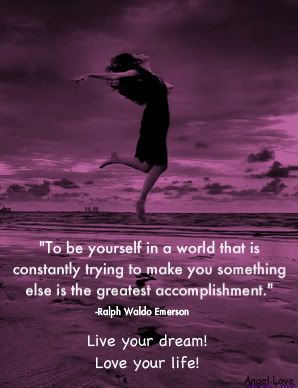
Be Yourself, Everyone Else is Already Taken


What it Really Means to Be Authentic

Authenticity is about enjoying a new sense of freedom to be who we really are -- ourselves, natural and without a mask in our relationships, our work and our life.

It takes courage, commitment and depth to:
• Look within ourselves
• Tell the whole truth (even when we don't want to)
• Be vulnerable
• Admit, own and share our true thoughts, feelings, desires, insecurities, passions, embarrassment, dreams and more.
However, being open and real about all of these things (and more) is what it means to be authentic in life.

In order to utilize the power of authenticity in your life as a way to enhance your relationships, increase your fulfillment and empower yourself, here are five key principles:


5 PRINCIPLES FOR BEING AUTHENTIC
1) Know Yourself  
Make a commitment to your own personal growth. Discover more of who you are. And, seek out and allow the support, honest feedback, and guidance of others. 
2) Transform Your Fear  
There's nothing wrong with having fear, it's the resistance and denial of fear that is the real problem. When you admit, own, feel, and express your fear, you have the ability to move through it, transform it, and utilize its power in a positive way. Taking action in the face of fear is courageous and empowering. 
3) Express Yourself  
Have the courage to speak your truth boldly. Deal with conflicts directly. Express your emotions fully. Be vulnerable and real about what you think and how you feel. While on the surface you may worry that this will be seen as "weak," in actuality expressing yourself completely gives you access to real freedom and power. 
4) Be Bold  
Live, speak, and act with courage, passion, and truth -- even if it's difficult or scary. Go for what you want in your work and in your life. And get back up when you fall down, which you will. 
5) Celebrate Who You Are  
Appreciate and honor who you are, what you do, and the gifts and talents that you have. Celebrating yourself is not about being arrogant. It's an awareness of your own power and it's the key to self confidence, fulfillment, and authenticity.


Being your authentic self is not for the faint of heart but once you're willing to truly engage and do the work to become more real -- your life, your work and your relationships will be more exciting, meaningful and fulfilling!


mike-robbins.com


Bookmark and Share

How to Practice 'The Art of Allowing'


by Mike Robbins -

What would you think if someone told you to start practicing the art of allowing? If you have a firm grip on your world and don't want to let go, it may be difficult.

Find out how a little faith, patience and trust can get you a long way when it comes to your well-being.

A few months ago, I got some specific feedback that it would serve me, my work and my growth to start practicing the art of allowing in a more conscious and deliberate way.

While I was familiar with the concept of allowing, I realized I had very little awareness or experience of it in actual practice. As I looked into it more deeply, I noticed I had a judgment about the whole concept of "allowing." 

It always seemed weak, passive, lazy or based on luck to me. I've always prided myself on being a hard worker, a go-getter and someone who makes things happen.

However, as I have recently come to understand, much of this has to do with a deep-seated fear that if I ever slow down, stop pushing so hard or simply expect things to just show up with ease, the whole house of cards that is my life and my work will simply come crashing down around me.

Can you relate?

Allowing, however, is an essential aspect of life and growth, as well as of your success and fulfillment. The first aspect of allowing has to do with accepting things as they are.

As author and teacher Byron Katie says,
"When you argue with reality, you lose—but only 100 percent of the time."
When you're able to allow people, things and situations to be as they are—without judging them, trying to fix them or wanting to change them—you begin to tap into the immense power of allowing. 

Ironically and somewhat paradoxically, when you truly allow things and people to be exactly as they are, you open up a space for real change and transformation to occur (if that is what you want).

The deeper aspect of allowing has to do with trusting, being patient and having faith that what you want to manifest, create and experience can and will show up in your life as it is meant to. 

In other words, it's an ability to allow things to happen and materialize, without you having to manipulate, dominate or control other people or situations to make them happen. If you have a tendency to be a control-freak at times, this can be incredibly challenging.

The paradox that exists with allowing runs deep within you. Perhaps you were taught and believe "if it is to be, it's up to me." And while there is truth and wisdom in this philosophy, feeling as though you have to work hard, run fast, keep up and make everything happen in your life is exhausting and insatiable.

No matter how hard you work, what you try to fix or all of the changes you intend to make, if you don't learn, practice and ultimately master the art of allowing, true success and fulfillment will always elude you.

Action is important but you also have to learn to balance it out with your ability to allow.

Allowing takes faith, patience and trust—three things that are essential for your own peace of mind and well-being but often are not things we focus on, learn about or are encouraged to practice in our intense, fast-paced, results-oriented culture.

Allowing is truly an art and is something that often goes against the grain and runs contrary to societal norms and pressures. It has to do with remembering, as the well-known saying goes, "We're human beings, not human doings."

Here are a few things to think about and practice as you enhance your capacity and ability to allow with more ease in your life.


3 WAYS TO PRACTICE ALLOWING
1. Ask yourself how you relate to the concept of allowing.  
Take some inventory of your own relationship with this idea. How do you feel about it? How comfortable are you allowing things and people to be as they are, as well as allowing things to manifest with ease in your life?  
This is something you may understand, but may not practice. Tell yourself the truth about how you relate to allowing, and notice how this impacts your life one way or another. 
2. Pay attention to what you focus on in regard to your biggest goals and aspirations.  
In terms of the biggest goals, dreams and aspirations in your life right now, how much of your attention and energy are focused on doing, and how much are focused on allowing?


While both doing and allowing are important, most people put a disproportionate amount of attention on action.  
Increasing your focus on allowing and ultimately receiving can be a magical, relaxing and incredibly effective way for you to relate to your goals and dreams. This is often one of the big missing pieces in your desire not only for success, but—more important—for fulfillment. 
3. Create an allowing practice.  
This is a simple practice you can do daily (like prayer, meditation, quiet reflection or affirmation) when you put your attention and awareness on allowing: accepting things as they are; trusting things are working out as they are meant to; believing the feelings, experiences, accomplishments and outcomes you desire are on their way; and allowing yourself to receive these gifts and blessings with ease and gratitude.  
You may need to reach out to others for support, guidance and feedback about creating or deepening an allowing practice that will work for you, but doing this is one of the greatest gifts you can give yourself (as well as those around you).

Have fun with this and have compassion for yourself as well. Allowing is a lot easier to think about or talk about than it actually is to practice and embody in your life. 

The more attention you put on it, however, the easier it gets. As you deepen your ability and your capacity to allow, your whole life can transform with ease, grace and gratitude!


About Author: Mike Robbins; best-selling author, sought-after motivational keynote speaker and personal growth expert who works with people and groups of all kinds. Robbins is the author of the best-selling books Focus on the Good Stuff and Be Yourself: Everyone Else Is Already Taken. He and his work have been featured on ABC News and in Forbes, Ladies Home Journal, Self and many other publications.

mike-robbins.com


RECENT POSTS